

DFMEA
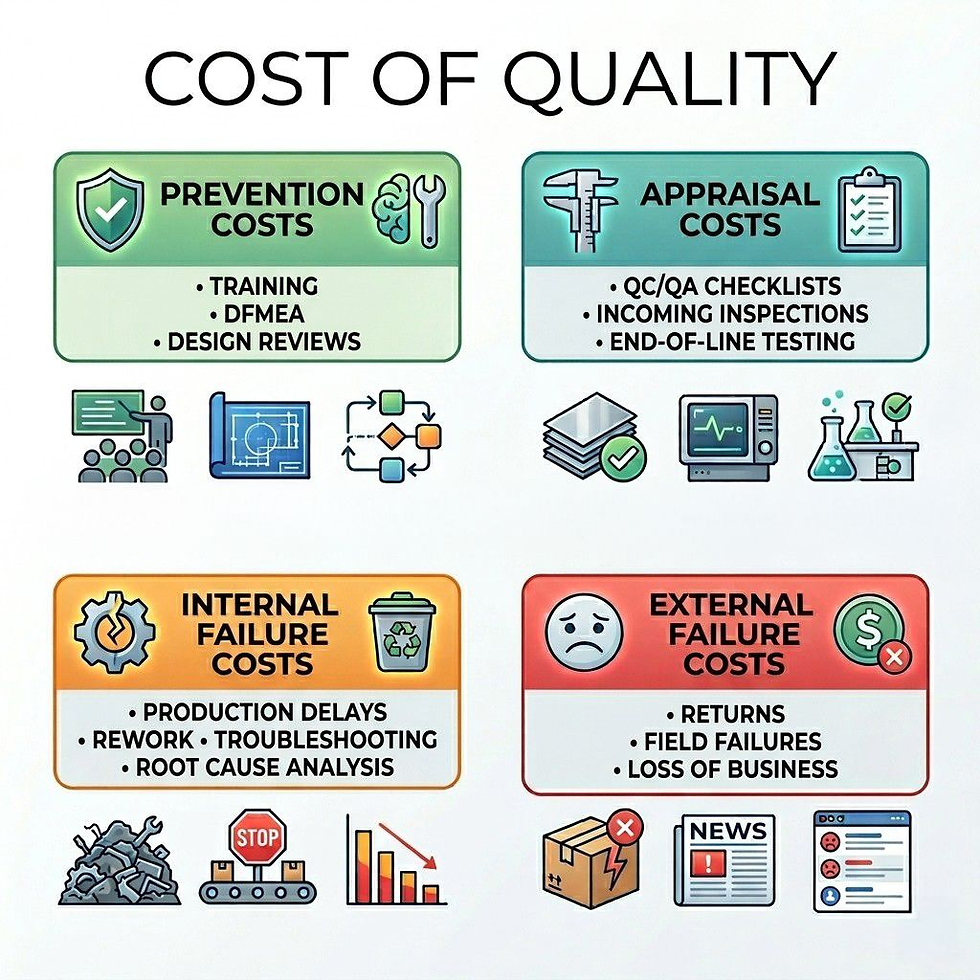
Design Failure Mode and Effects Analysis (DFMEA) is used to stop failures before they happen – and cost you!
It determines all the possible ways a design could fail, then prioritizes the risk level of each.
Think of it as putting your design under the microscope.
Whatever you do, don’t enter production without performing a DFMEA!

Here is the process:
1. Start by defining your parts, their function, and specs.
2. Identify a failure: What would result in a loss of function?
3. Determine the effects of that failure. How severe is the effect? (1-10)
4. What would cause the failure?
5. What controls are in place to prevent/reduce the failure’? What is the probability? (1-10)
6. What are the current design controls to detect failure? How robust is the detection? (1-10)
7. Calculate the Risk Priority Number (RPN): Severity x Probability x Detection.
8. Based on the RPNs, recommended actions can be ranked in order.
DFMEA should be performed throughout the design process. The earlier it begins, the better.


Comments